
Mufasa: The Lion King – A Beautiful Echo Lacking a Heartbeat
Barry Jenkins’ Mufasa: The Lion King is a visually striking return ...


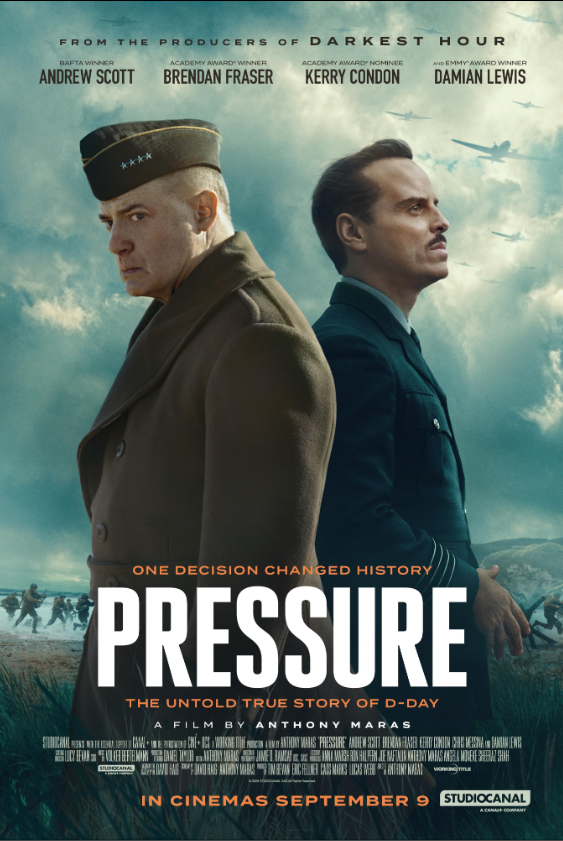
Anthony Maras’ ‘Pressure’ is the kind of war film that understands that history is often shaped long before the first shot is fired. Rather than taking audiences to the blood-soaked beaches of Normandy, the film locks its attention onto a handful of rooms, a collection of anxious men, and a ticking clock that grows louder with every passing hour. What emerges is a gripping historical drama that finds suspense not in combat, but in uncertainty.
Set during the crucial seventy-two hours leading up to D-Day, Pressure explores one of the most consequential decisions of the Second World War. The success or failure of the Allied invasion rested on countless factors, but Maras focuses on one that is often overlooked: the weather. It may sound like an unusual foundation for a thriller, yet the film quickly proves that forecasting atmospheric conditions can be every bit as dramatic as planning military strategy when millions of lives hang in the balance.
At the center of the story is Captain James Stagg, portrayed with remarkable precision by Andrew Scott. Stagg is not a conventional cinematic hero. He is neither charismatic nor larger-than-life. Instead, he is a man burdened by expertise, responsibility, and the knowledge that telling powerful people what they do not want to hear can come at a steep personal cost. Scott embraces these qualities fully, delivering a performance built on quiet determination rather than dramatic outbursts.
What makes Stagg such a compelling figure is his unwavering commitment to the truth. As military leaders search for reassurance and certainty, he offers neither. His forecasts paint a troubling picture, placing him at odds with influential voices who believe the operation can proceed as planned. Scott captures the internal struggle of a man who understands that being correct may not be enough; convincing others is the real battle.
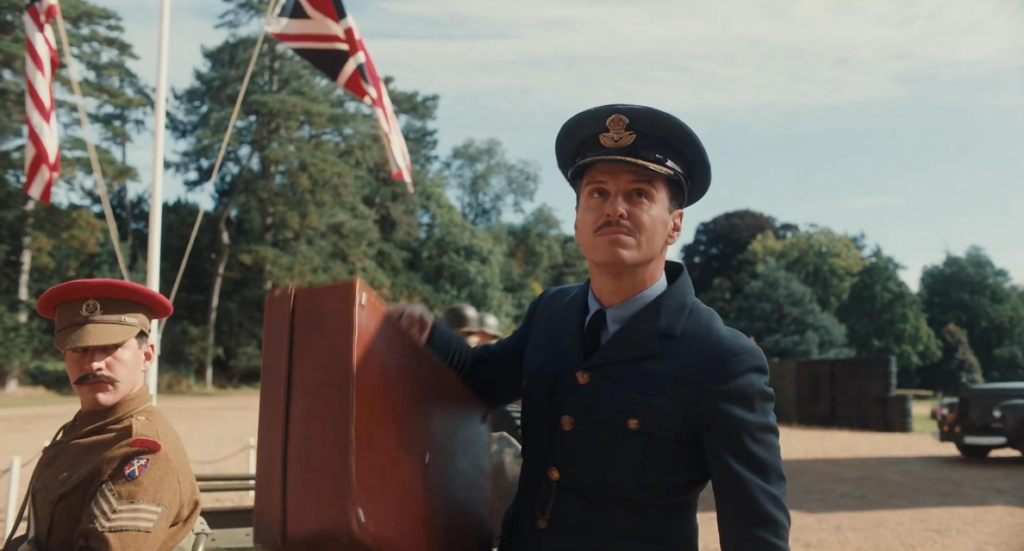
Brendan Fraser’s portrayal of General Dwight D. Eisenhower provides an equally strong counterbalance. Rather than presenting the legendary commander as an untouchable military icon, the film humanises him. This Eisenhower is carrying the immense burden of command, aware that whatever choice he makes will have consequences measured in lives. Fraser brings a weary authority to the role, portraying a leader wrestling with doubt while attempting to project confidence. It is one of the film’s strongest achievements that it allows viewers to see the vulnerability behind the rank.
The dynamic between Stagg and Eisenhower forms the emotional backbone of the narrative. One man possesses the information; the other must act upon it. Neither envies the other’s position. Their interactions create a fascinating study of leadership, responsibility, and trust. In many ways, Pressure becomes less about weather forecasts and more about decision-making under impossible circumstances.
Maras deserves considerable credit for maintaining tension within such a confined setting. The film rarely relies on spectacle. There are no extended battle sequences, no grand displays of military might, and no attempts to artificially inject action into the story. Instead, the suspense emerges organically from conversations, disagreements, and the relentless march of time. Every new weather report feels significant. Every meeting carries weight. Every hour that passes narrows the available options.
The screenplay demonstrates a clear understanding of how to transform historical events into compelling drama. Complex meteorological discussions are presented in a way that remains accessible without oversimplifying their importance. More importantly, the script never loses sight of the human beings behind the statistics and forecasts. These characters are not merely debating weather patterns; they are contemplating the fate of an operation that could alter the course of history.
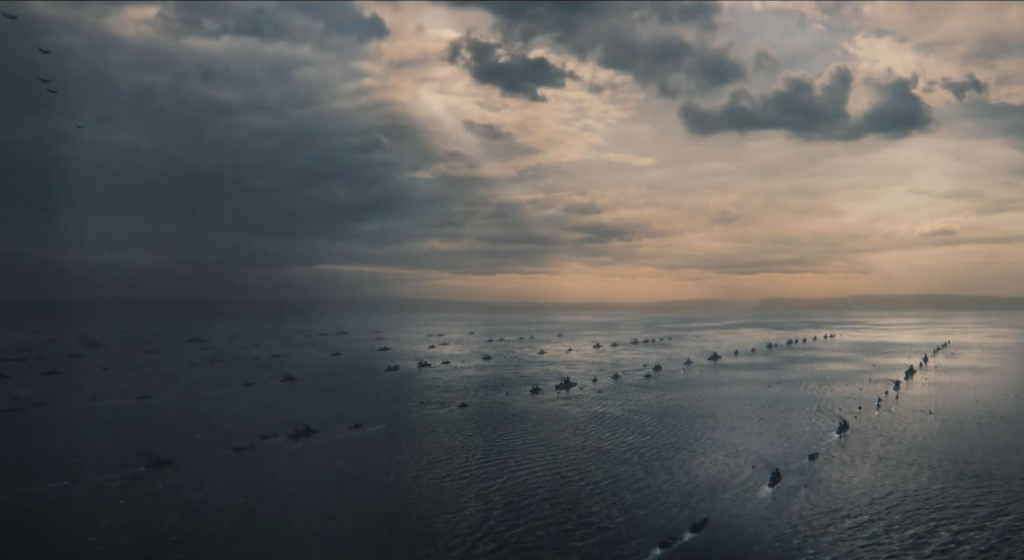
Visually, ‘Pressure’ embraces restraint. The production design effectively captures the atmosphere of wartime command centres, where maps cover walls and every telephone call feels urgent. The confined locations reinforce the feeling of isolation experienced by the characters. While armies prepare across Europe, the men in these rooms are trapped with uncertainty, waiting for nature to reveal its intentions.
The cinematography contributes significantly to the film’s mood. Shadows, muted colors, and tightly framed compositions create a sense of claustrophobia that mirrors the mounting pressure suggested by the title. The audience becomes as trapped as the characters, unable to escape the growing tension that permeates every scene.
What stands out most about ‘Pressure’ is its appreciation for the unseen contributors to history. The film reminds us that history is often shaped by experts, advisors, and specialists working far from public view.
That thematic focus gives the film a refreshing identity within the crowded World War II genre. It avoids many familiar conventions while still delivering the suspense and emotional investment audiences expect from a war drama. By concentrating on preparation rather than execution,
If there is any criticism to be made, it is that viewers seeking large-scale action may find the film’s measured approach less immediately engaging. However, those willing to embrace its deliberate pacing will discover a richly rewarding experience. The tension is constant, the performances are excellent, and the historical significance of the events provides an ever-present sense of gravity.
In the end, ‘Pressure’ succeeds because it understands that courage takes many forms. Sometimes it is found on a battlefield. Sometimes it is found in a command room, where a man must stand by his convictions despite overwhelming opposition. Anthony Maras has crafted an intelligent, absorbing drama that transforms weather reports and strategic discussions into compelling cinema.
Barry Jenkins’ Mufasa: The Lion King is a visually striking return ...
Long before they premiered films at international festivals, Alex and Diego ...


Leave A Reply