
Lightbulb Film Distribution shared the official trailer for new thriller The G.
Lightbulb Film Distribution is pleased to announce the official trailer for ...


I started off my year well, finally going to see that one film everyone seems to have an opinion about, Avatar: Fire and Ash, a film that is caught between conviction and comfort.
James Cameron once again invites us back to Pandora with the confidence of a filmmaker who knows his audience will follow. The question is no longer whether he can dazzle us, but whether the world he has built is still capable of surprising us.
At its emotional core, ‘Fire and Ash’ is a film about grief and inheritance. Jake and Neytiri’s family is still reeling from loss, and James Cameron wisely allows that pain to linger rather than rushing toward resolution. There is a tenderness in how the film observes parenthood under siege and how love becomes both armour and vulnerability. These quieter moments, especially between Neytiri and her children, give the film its most human texture, grounding a three-hour spectacle in something recognisably fragile.
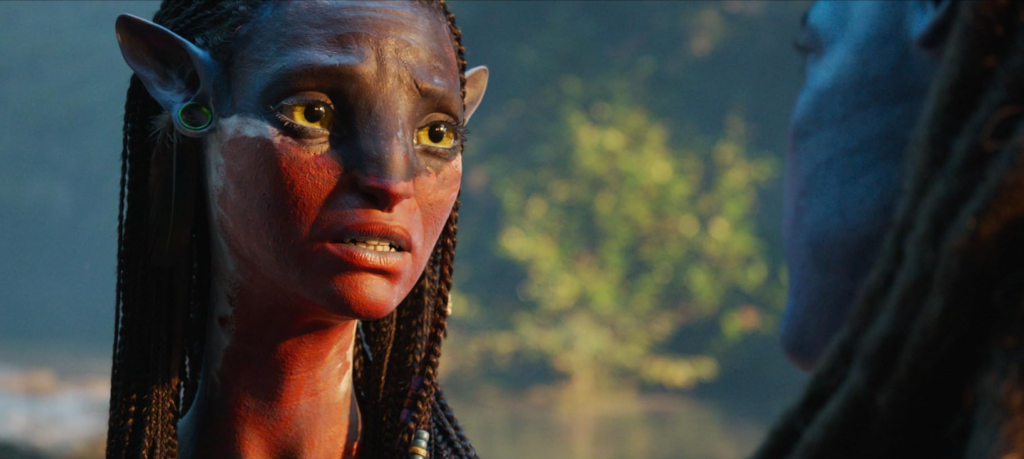
The introduction of the Ash People is the film’s boldest move. Visually, they are a striking rupture from Pandora’s familiar blues and greens, charcoal skin, scorched landscapes, and fire instead of water. Conceptually, they promise moral complexity. A Na’vi clan shaped by abandonment, loss, and rage, no longer interested in harmony as a guiding principle. Varang, their leader, enters the film like a warning flare, fierce, commanding, and unapologetically severe. For a while, she feels like the future of this franchise.
And yet, that promise only partially holds. Varang’s fire burns bright early on, but the film seems unsure of what to do with a woman who refuses softness or moral reassurance. As the narrative progresses, her radical edge is dulled, her agency increasingly defined by male power rather than her own ideology. It’s a frustrating retreat, especially from a filmmaker who once gave us women who did not need permission to lead.
James Cameron remains unmatched when it comes to physical immersion. The action elements, particularly in and beneath the water, are breathtaking, tactile, and hypnotic. You feel the weight of bodies moving through space, the resistance of nature pushing back. In the air, however, the spectacle becomes more familiar, even repetitive, echoing beats we’ve seen before. The film is never dull, but it does occasionally feel safe in its rhythms.

Where Fire and Ash stumbles most is in its dialogue. Too often, characters speak in language that feels borrowed from blockbuster shorthand lines that explain rather than reveal, speeches that motivate without surprising. In a film so invested in the idea of indigenous resistance, it’s striking how rarely the Na’vi are allowed to sound truly different in how they think, argue, or decide. The struggle is righteous, but the imagination behind it feels curiously constrained.
Still, there is something undeniably compelling about Cameron’s sincerity. For all its contradictions, Fire and Ash believes in cinema as a communal experience, in emotion as a unifying force, in the idea that spectacle can still carry meaning. It may not fully escape the shadow of its predecessors, but it continues to ask an important question: what happens after resistance becomes tradition?
Avatar: Fire and Ash is not a reinvention of the franchise, but it is a thoughtful continuation, beautiful, frustrating, emotionally resonant, and ideologically cautious. Like fire itself, it warms, illuminates, and occasionally burns, even if it never quite risks becoming a wildfire.

Lightbulb Film Distribution is pleased to announce the official trailer for ...
Maite Uzal’s 'Mariana Hormiga' unfolds like a dream steeped in folklore ...


Leave A Reply