
In Conversation: Jessica Perlman on ‘Talk’, Authentic Storytelling, and Amplifying Deaf Voices
Authenticity and representation in filmmaking plays a crucial role in shaping ...

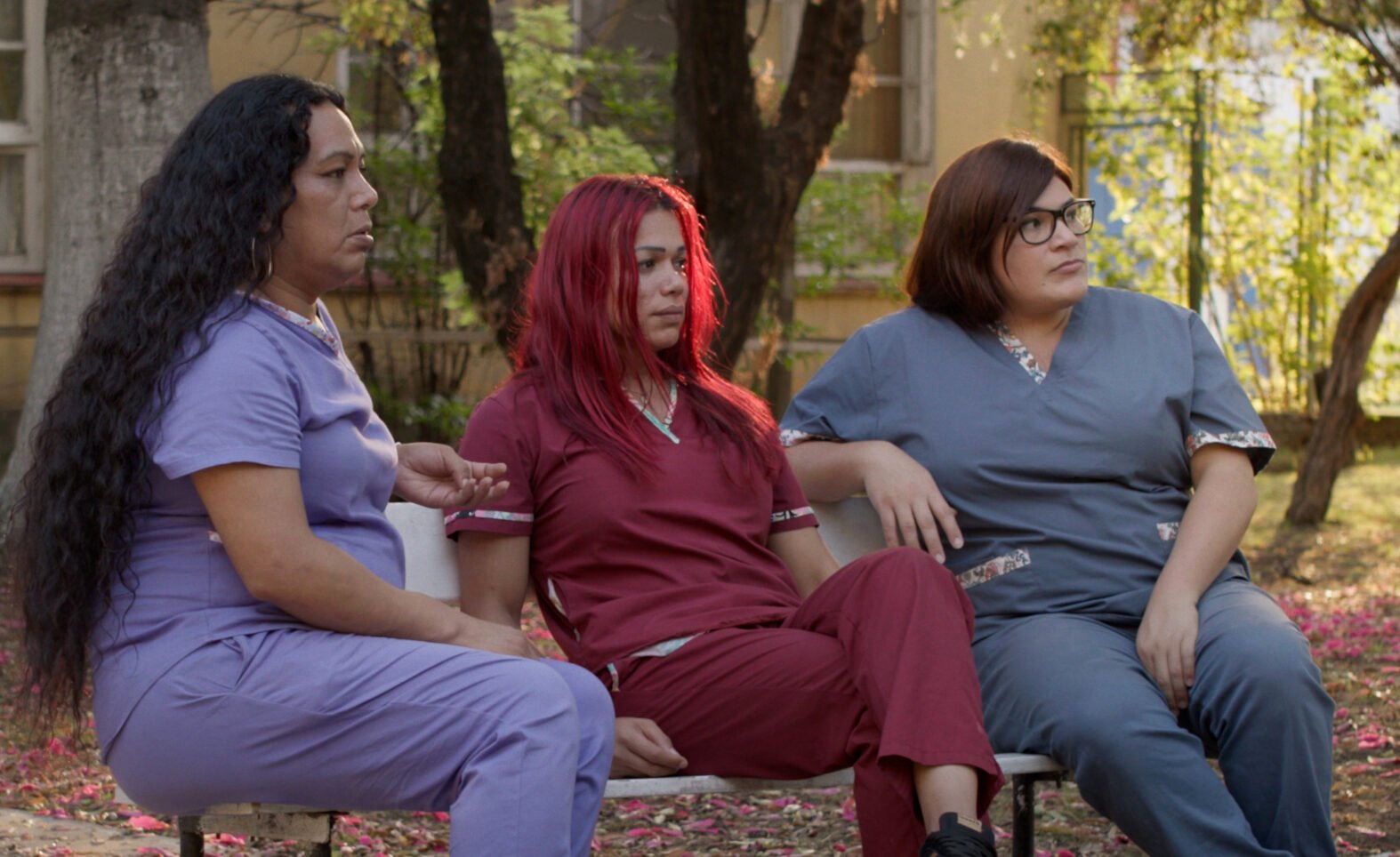
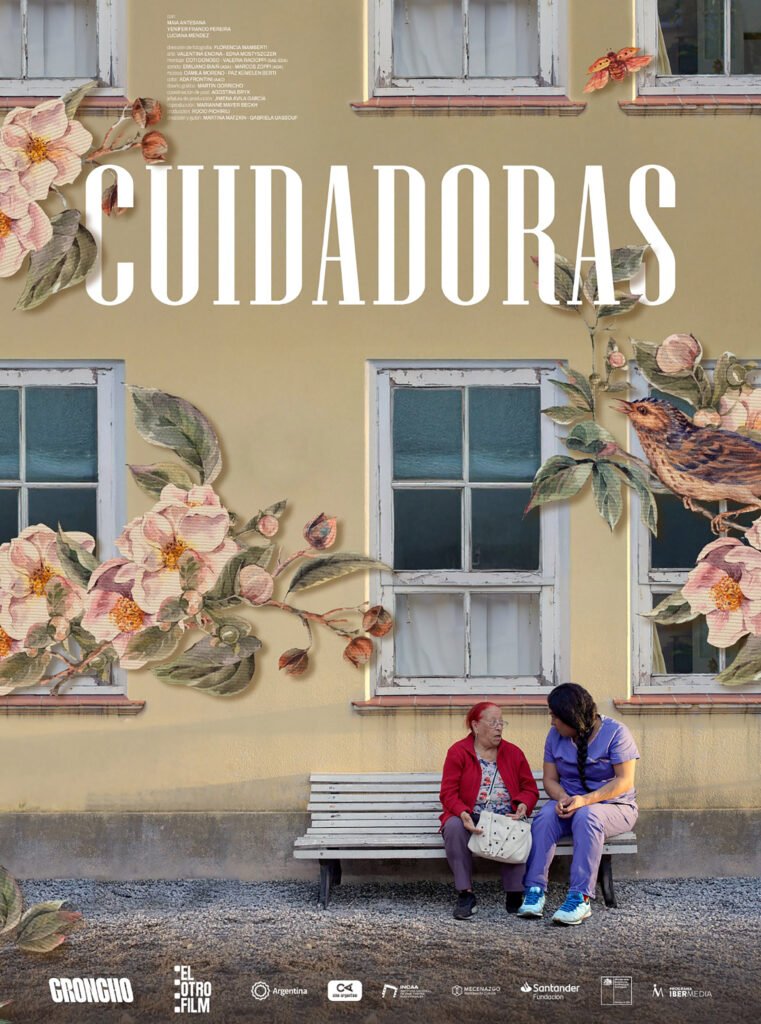
In the quiet corridors of a public nursing home, life unfolds in small gestures likehelping someone sit up, adjusting a blanket, sharing a laugh that briefly interrupts the stillness of old age. It is within this intimate space that ‘Cuidadoras‘ a documentary film directed by Martina Matzkin and Gabriela Uassouf, gently invites us to observe the daily lives of three transgender caregivers and the elderly residents they tend to.
The result is a film that feels less like a constructed narrative and more like a window quietly opened onto a world we rarely pause to look at.
From the very beginning, the filmmakers adopt a strictly observational approach. No interviews are guiding our interpretation, no talking heads offering commentary, and no archival footage to contextualise events. Instead, the camera simply exists within the nursing home, moving patiently through hallways and rooms as if it were another silent resident.
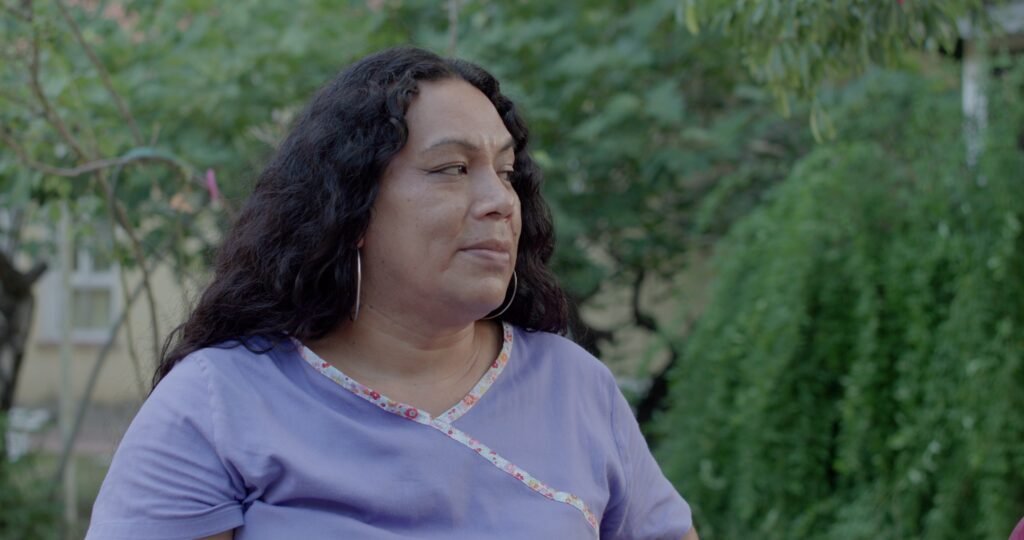
We, the viewers, become, quite literally, a fly on the wall watching how nurses and caregivers interact with the elderly, witnessing the rhythms of caregiving as they unfold naturally.
What is striking is how genuine these moments feel. Everyone on screen clearly knows the cameras are present, yet the atmosphere never feels performative. Conversations drift in and out of earshot, routines continue uninterrupted, and the residents go about their days with a quiet authenticity. Within the first twenty minutes alone, the film gives us a surprisingly clear sense of how the institution operates. We see the pace of the work, the emotional patience required, and the quiet compassion that underpins the daily tasks of caregiving.
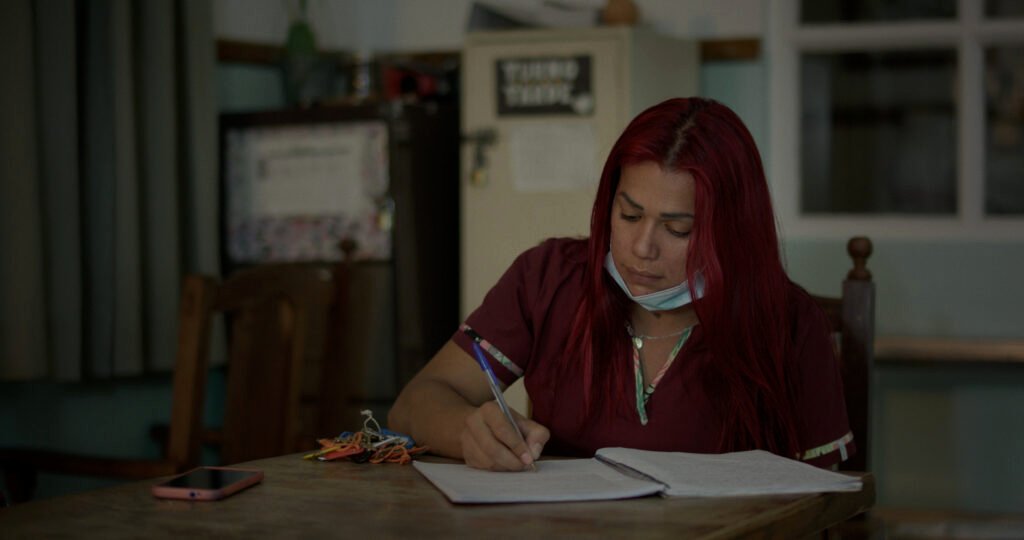
At the heart of the film are Luciana, Maia, and Yenifer. These three are transgender women beginning their journey as caregivers in what, for some of them, is their first experience with formal employment. Through their presence, ‘Cuidadoras‘ reveals the delicate balance between vulnerability and resilience. There is a moment when the three women sit together and speak candidly about the prejudice they sometimes face from certain residents. It’s not presented as a dramatic confrontation, but rather as an honest acknowledgement of the reality they must navigate.
The conversation carries a mix of frustration, humour, and quiet determination, an emotional complexity that makes the moment feel deeply human.
As the documentary unfolds, we gradually learn more about the lives of these caregivers beyond their uniforms. Their stories emerge organically through conversations and reflections shared during breaks or while tending to residents. Bits of their past surface childhood memories, struggles with acceptance, and hopes for the future. These glimpses never feel forced. They arrive naturally, like confidences exchanged in a place where time moves slowly enough to allow them.
What gives this film its emotional resonance is the subtle bond that forms between the caregivers and the elderly residents. The home becomes a space where two groups both often overlooked by society encounter each other in unexpected ways. Some residents approach the caregivers with curiosity, others with warmth, and occasionally with hesitation. Yet over time, shared routines and simple acts of care soften the boundaries between them.
There are moments of tenderness that linger long after the film ends. A caregiver patiently helping someone walk down a corridor, a resident reminiscing about a life once lived with youthful energy, a quiet exchange that speaks volumes without raising its voice. These scenes remind us that caregiving is not only about physical assistance. It is also about presence, listening, and the quiet dignity of being seen.
In many ways, ‘Cuidadoras’ is less concerned with dramatic storytelling and more interested in observation. It trusts the everyday to reveal its own meaning. And in doing so, the film gently nudges us toward a realisation that feels both simple and profound: when people share space, time, and vulnerability, prejudice slowly begins to dissolve.
By the time the credits roll, the nursing home no longer feels like an institution. It feels like a fragile, imperfect community. One built not on grand declarations, but on the quiet, steady work of caring for one another. And that quiet humanity is what makes this film such a tender and deeply affecting watch.
Authenticity and representation in filmmaking plays a crucial role in shaping ...
Riley Helm shows pure comedic genius in the cleverly titled short ...

Leave A Reply