In Conversation: From Legacy to Screenplay- Ron Yungul on Crafting ‘The War Between’
There’s something deeply compelling about stories that echo through time. Especially ...

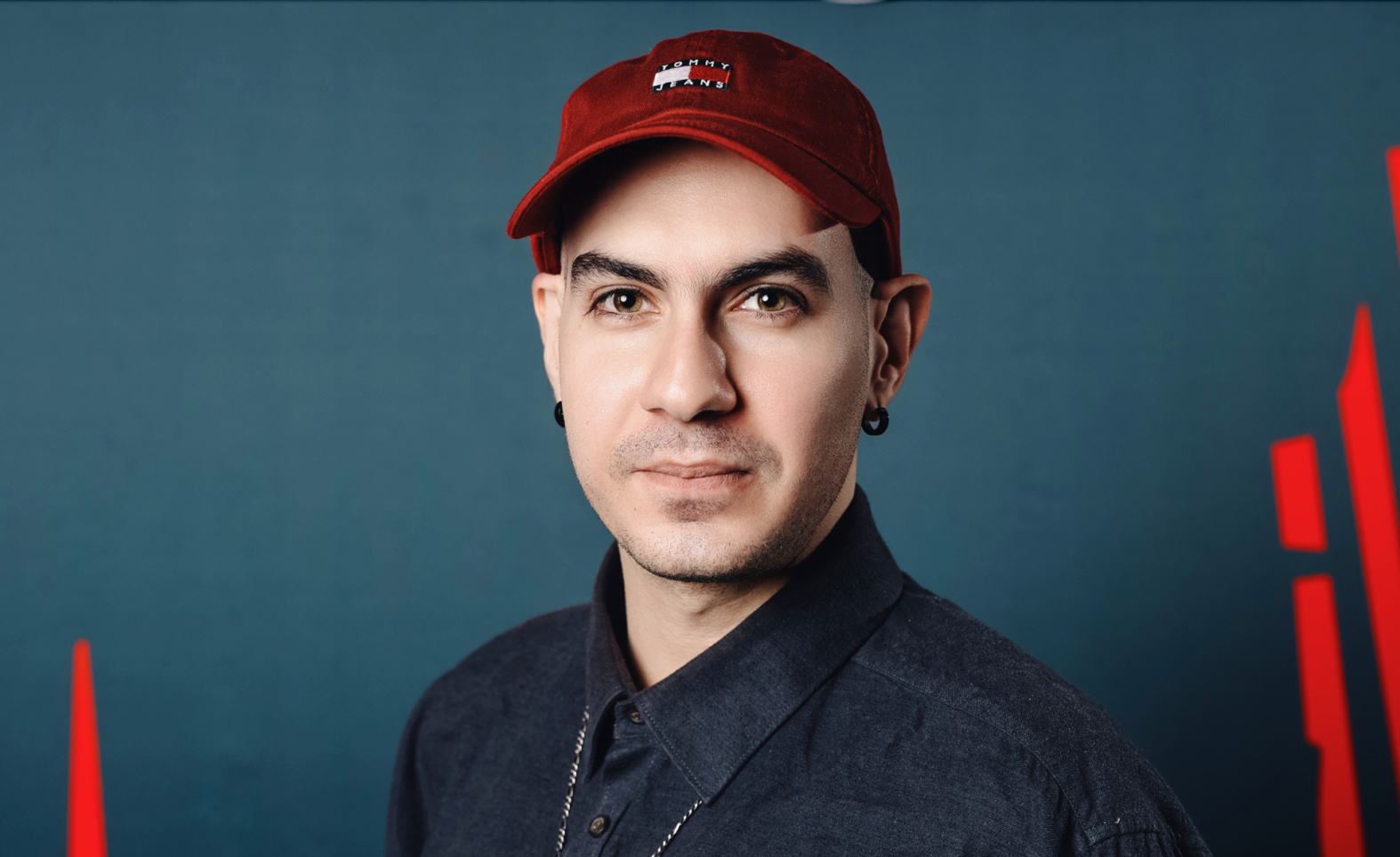
There’s a quiet honesty that runs through Omar Elhanbouly’s voice. One that doesn’t try to romanticise the immigrant journey, nor does it shy away from its contradictions. In Eyelashes, that honesty finds form in Mohammad, a young man suspended between ambition and belief, survival and selfhood. What begins as a pursuit of an acting dream slowly unfolds into something far more intimate. A meditation on sacrifice, identity, and the invisible negotiations that come with starting over.
The film’s writer and director, who is also the lead Omar Elhanbouly, draws from his own migration from Cairo to London, shaping a narrative that feels both deeply personal and universally resonant, where every choice, creative or emotional, carries weight. In this conversation, he shares it all.
Omar: A lot of people get surprised when I tell them that I studied dentistry for my bachelor’s! But I actually never liked it. It simply wasn’t for me. I took a filmmaking diploma in the summer of 2017, and that was the spark to my whole filmmaking journey. I’ve been making short films ever since. After my graduation from dental school, I took a master’s degree in Film and Television Production at Anglia Ruskin University in Cambridge, UK. I learned a lot about production in general, but the only skill that I lacked was writing. I spent the whole year of 2023 studying it on my own. Writing is not as easy as most people think!
Omar: Migrating to another country demands a lot of sacrifice. And when somebody’s trying to achieve a dream of theirs in a completely new country with a different language and culture, it becomes even more challenging. That’s why Eyelashes is a fish-out-of-water story. The theme of art vs commerce/money is a strong one in this project, too, because it has been a struggle with every artist I know, including myself. So I wanted to talk about “legal” immigration, about the people who choose to pay a lot of money to move to another country in order to chase a dream of theirs and have a better way of living. With the current global conflicts, it’s becoming increasingly more difficult for people to find a safe place to build a better future. I rarely see any programming or film projects that deal specifically with international citizens living in the UK — particularly Arabs, so I thought of making one!
Omar: I had some conflicts with my faith before. I might be mistaken, but I think a lot of people have that, too. Matter of fact, I go through a lot of internal conflict every day in various aspects of my life. From something as small as deciding what to have for dinner to asking myself whether I still want to keep working in this industry or perhaps quit it and work at a farm!
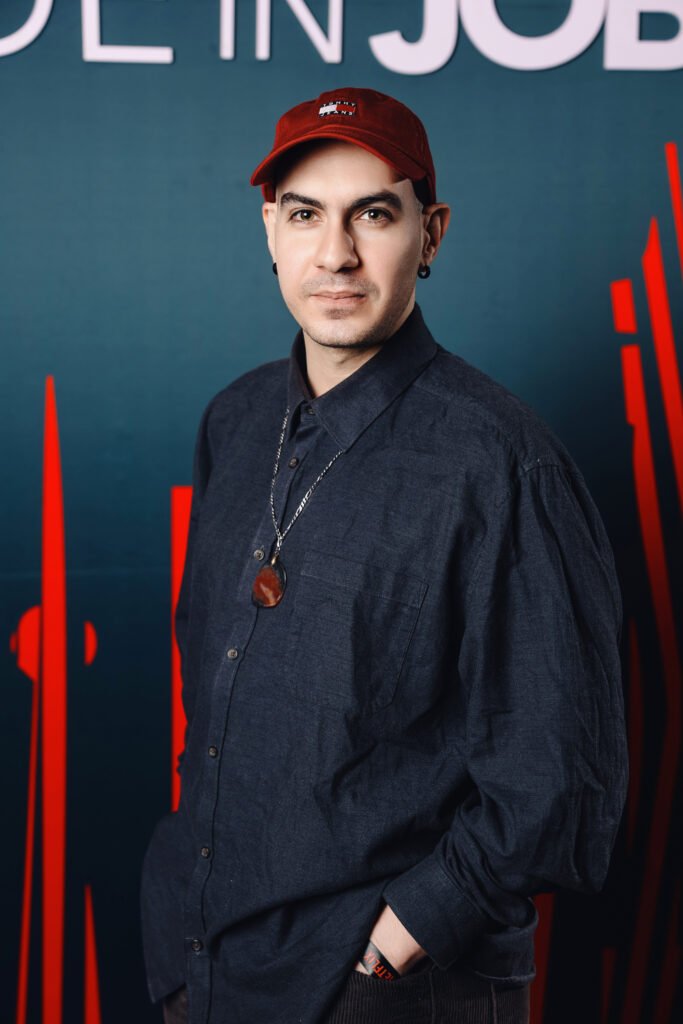
Omar Elhanbouly
Omar: While writing the film, I had to be careful not to disrespect both cultures. I truly believe that no culture is bad. They’re only different. Even though I had to go with some stereotypes such as Mohammad, the main protagonist, having a long beard to show that he is a hardcore Muslim. Also, David, the theatrical agent, with the Star of David necklace on his assistant’s neck and the menorah in his office. Not only all that is for dramatic purposes, but also, when I first came to London, I found her cultural diversity really amazing. It’s a city where, on any map, you can find a mosque right next to a church, right next to a synagogue, or even a Hindu temple. I simply wanted to show a glimpse of that.
Omar: Yes! I’ve always pictured myself playing the role of Mohammad while writing Eyelashes, as it’s heavily inspired by my own personal experiences. As far as the other casting choices go, such as David and Paco, I’ve known the actors playing them, Robert Firth and Miguel Angel Plaza, respectively, for years. When I saw their showreels, I instantly knew that there’s going to be a time where we all collaborate on one project, and we did it. The rest of the cast was through extras casting agencies.
Omar: Definitely! I don’t have a British accent, for example, so it’s very obvious that I’m a foreigner and I get to be treated this way. However, I got very assimilated into London’s fashion scene, which I now feel more comfortable with, but it heavily impacted how I was perceived in Cairo. So I fell into this place between the two that I call the Limbo.
Omar: The story and the themes appeal to a wider audience. My point of view and, by proxy, the protagonist, are very specific to an underrepresented community in the West and around the world, which is the Muslim community. It is generally underrepresented in Western entertainment, and I just wanted the viewers to have a closer look at that and the things they had to let go of in order to reach whatever they wanted to reach. That’s why we used a lot of close-up shots to capture the reactions on Mohammad’s face. Like spectators, we’re following him everywhere he goes, and most of the time, the eyes speak louder than words.
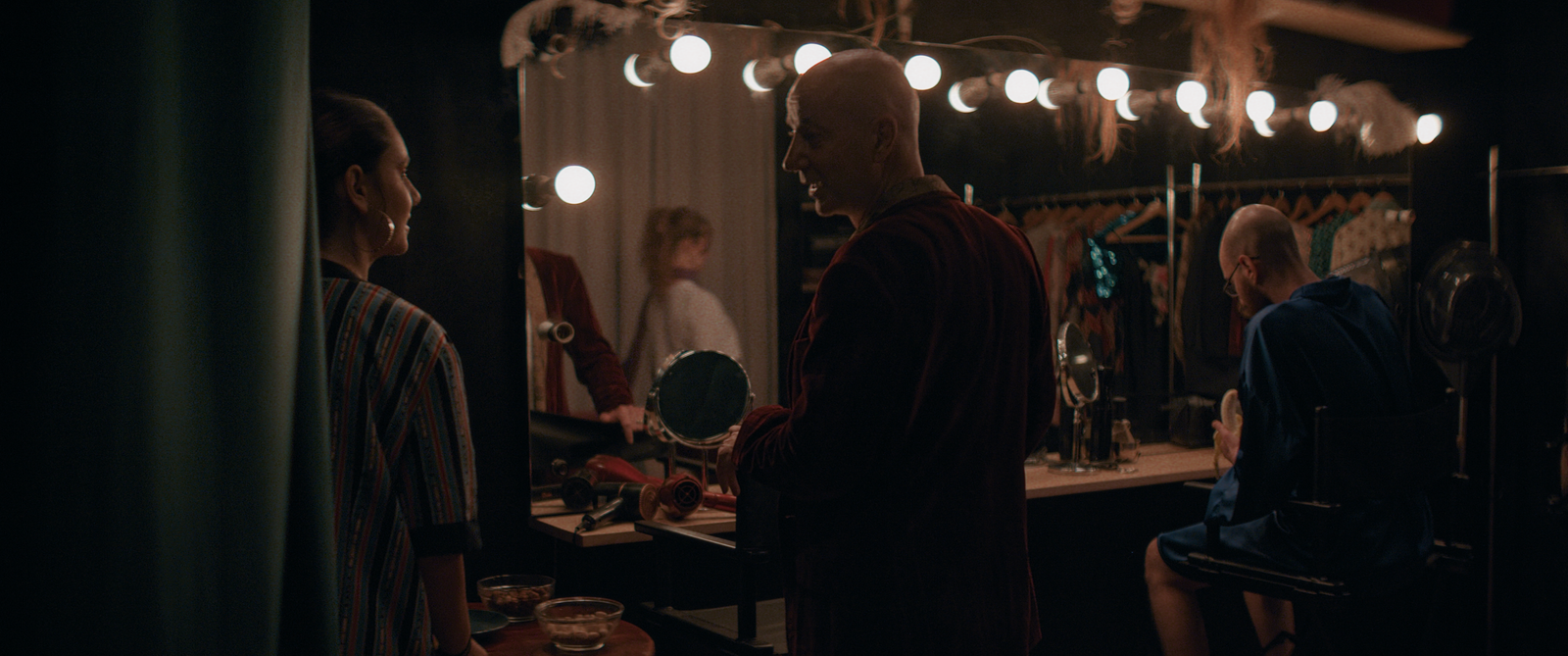
Eyelashes (2026)
Omar: Being a director and the lead actor is a big challenge on its own. But given that Eyelashes takes place in London, we actually shot all the interior locations in Cairo, and all the exterior locations in London! It was basically way cheaper to do it this way. So I had to deal with the logistics while also staying in touch with my producers in Cairo because we had two units. One in the UK and the other in Egypt. I had to make sure that literally everybody is included in the process and on the same page.
Omar: Eyelashes is primarily a feature film. I just had to take a section from the middle and turn it into a proof of concept. So, in the feature, we will get to see who Mohammad is, his whole journey of migrating to another country, and how this journey is going to change everything about him. We will also get to see who David is and what kind of work he does. In the short, we see Mohammad accepting a job from David. But allow me to tell you that this is not going to be his last project with him!
Omar: Muslims usually associate their faith with their beards. Growing facial hair is considered a great Sunnah of the Islamic Prophet Mohammed. Sunnah is the body of traditions and practices of the Prophet Muhammad that constitute a model for Muslims to follow. So, growing a beard is basically a tradition of the Prophet Muhammad.
Omar: Immigration and faith are certainly big topics, but we wanted to combine an interesting narrative with complex characters telling a relatively simple story from a slightly dark, somewhat humorous perspective. If I were to describe the movie in three words, it would be “Crisis of Faith.” And the message I would want people to take away from watching Eyelashes would be more of a question actually. What would you sacrifice in order to achieve your dream? And how far with the sacrifice are you willing to go? Is there a red line that shall not be crossed? Something to think about!
Omar: It is now easier than ever to make a short film with the rise of technology and everything being very accessible. Writing, however, is the most challenging part of filmmaking, and I can’t emphasize enough how important writing is. So I would definitely recommend that any new filmmakers learn how to write. With regard to writing something that might challenge their faith and beliefs, I always go back to a quote that says, “The most personal is the most creative,” which Bong Joon-ho mentioned in his acceptance speech following his “Best Director” win at the Oscars with his film Parasite. Don’t be scared. You’d be surprised by the creative stuff that comes up while writing.
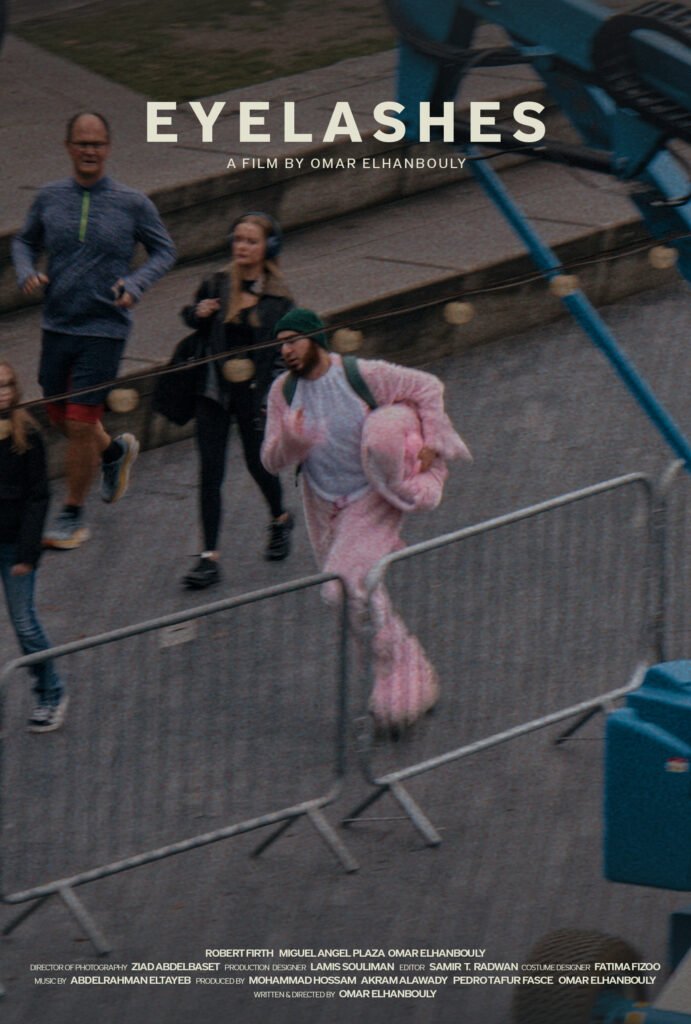
It is noticeable that through this short film, Omar Elhanbouly highlights and reflects on the winding path that led him from dentistry to filmmaking, his passion.
The internal conflicts that continue to shape both his life and his art, and the delicate balance of portraying faith without judgment. He speaks candidly about existing in the “limbo” between cultures, the challenges of wearing multiple hats on set, and the intention behind bringing audiences uncomfortably close to his protagonist’s emotional world.
At its core, Eyelashes is less about answers and more about questions. The kind that linger long after the screen fades to black. And perhaps that’s where its true power lies. In asking us, with quiet urgency, how far we are willing to go for the lives we dream of, and what parts of ourselves we might lose along the way.
There’s something deeply compelling about stories that echo through time. Especially ...
“A nuanced sports drama with stunning Grand Canyon views” The Times ...

Leave A Reply