In Conversation: Danica Jensen Discusses the Challenges and Triumphs of ‘Get You Better’
Through her latest film, 'Get You, Better', Danica Jensen explores the ...

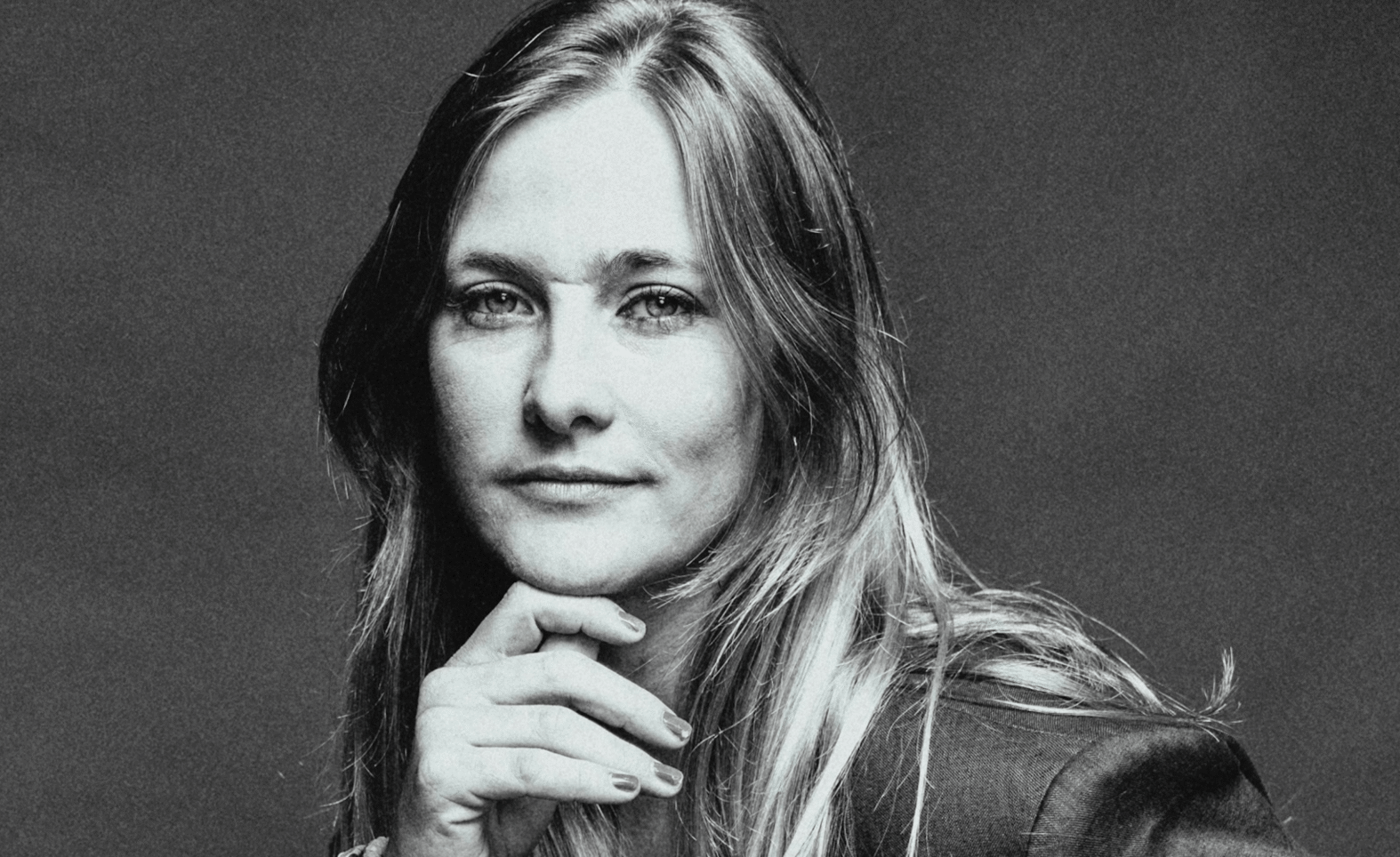
There is something quietly disarming about the way Josefina Pieres speaks about emotion as if she were not simply describing a process but gently inviting you back to a part of yourself you may have long abandoned.
‘In Two Tears’, her delicate and introspective debut narrative, that invitation becomes a cinematic experience shaped by memory, discipline, and the fragile, often unspoken language of feeling. What begins as a seemingly simple story about two young ballet dancers searching for “emotional tears” slowly unfolds into something far more intimate a reflection of childhood, grief, artistic awakening, and the quiet courage it takes to truly feel.
In this conversation, Josefina Pieres traces the deeply personal roots of the film, revealing a creative journey guided less by structure than by instinct, where the body leads, and the soul follows.
Josefina: I started as an actress in theatre, so my entry point into storytelling was always through the body and emotion. When I finished high school, I wanted to experience university life, so I went into film school as a way to expand my world as an actor, and that is where I began to find my own voice in storytelling.
Later, I went to New York to study acting at the Stella Adler Studio, and while I was there, I bought my first camera at B&H. That moment was very transformative for me. This world behind the camera started to open up in a completely new way, as another path to storytelling. The possibility of expressing emotion through images became incredibly captivating, and I felt drawn to explore that universe more and more.
At the same time, I began exploring directing both in film and in theatre, almost in parallel. That dual process really shaped me. It allowed me to develop a language that is both cinematic and deeply connected to performance.
Over time, directing became a natural extension of everything I had been searching for, a way to shape not only the performances, but the entire emotional language of a piece.
Josefina: I was having conversations with my producer, Mel Quintans, about how we could start telling stories rooted in Miami. Around that time, I was taking my son to theatre summer camp at the Miami Beach Regional Library, and I became very aware of that specific corner of the city, the Miami City Ballet, the Bass Museum, the library. It felt magical to me, like a world contained within itself.
I grew up watching The Nutcracker and other ballets, so there was something very emotional about seeing these young dancers moving with such discipline and professionalism. It brought me back to a very pure place.
At first, I wrote the synopsis in a very impulsive act, and when I read it out loud, it resonated deeply. Then, in the process of developing the script, I began to discover many emotional corners of my own childhood emerging. When I write, I try to do it without overthinking, to reach something deeper, to let the soul arrive before the mind. And from that place, the story came. It was a mix of magic, childhood, emotion, and the beginning of an artistic life.
Josefina: A lot of the film comes from a very personal place, even if it’s not autobiographical in a literal way. When I was eleven years old, my father died. From one day to the next, I became a very composed and controlled child. I didn’t want anyone to see me cry, so I learned how to hide my emotions and continue as if everything was fine.
That same year, I stepped onto a stage for the first time. Through performance, I found a language for feelings I didn’t yet know how to express. For a long time, I thought art had saved me, but through making Two Tears, I understood something deeper. Art protected me from shutting down. It allowed me to stay connected to emotion, even when I didn’t fully understand it.
Two Tears was a mirror. When I wrote it, I didn’t consciously set out to tell that story. It emerged on its own. Only later, in the process of developing the script, I began to recognize how many emotional corners of my own childhood were present in it.
I see myself in these girls, in their discipline, their seriousness, and their desire to do everything right. The film is really about that moment in life when we begin to navigate emotion, expectation, and identity. At its core, it’s about the courage to feel, because sometimes the answer is not in achieving the dream, but in allowing ourselves to experience it fully.
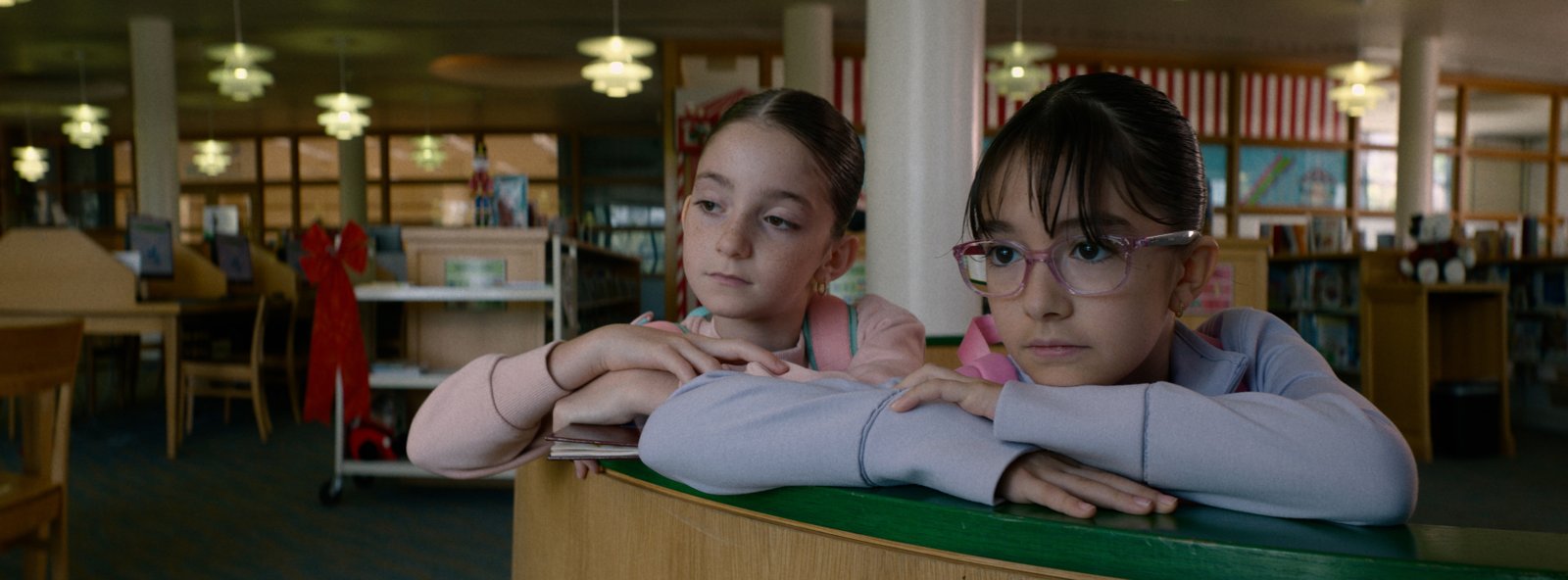
Josefina: We began the process through video submissions, working closely with our casting director, Saul Mauricio, and in collaboration with the Miami City Ballet School. It was important for us to find young performers who already had a strong foundation in ballet, so that the physical world of the film felt truthful.
After that first stage, I held live auditions, because for me it’s essential to meet actors in person. Auditions are not only about the moment they say their lines on camera. They begin the second someone walks into the room. I observe how they arrive, how they prepare, how they relate to the space.
When I saw Sofía Bela walk in and begin to get ready, I immediately felt she was Ginny. There was something in her attitude, in the way she prepared herself, that aligned very naturally with the character.
I also need to talk to actors, to understand who they are, how they think, and how they respond to direction. Casting, for me, is about building a relationship from the very beginning, and sensing if we can create something together.
Josefina: The fact that they are ballet dancers is very distinctive in the way they move through the world. Their discipline, their work ethic, their respect for detail, and their level of attention are already deeply ingrained in them. That brings a very specific presence to the screen.
I worked closely with them on breath, on how the characters exist before speaking. We explored how to search for the words before saying them, because these characters are not fully in control of what they feel. They are discovering emotion as it happens.
It was a real pleasure to explore that space of uncertainty with them. They were very open to it, and that openness allowed something very honest to emerge in their performances.
Josefina: We had an incredible team. It was a very strong production led by Stage 22, with Mel Quintans and Israel Consuegra, which made it possible to execute everything with a high level of precision.
Our assistant director, Giselle Castro, kept us on time throughout the entire shoot, which was essential given how tight the schedule was.
We did a very precise pre-production process with our cinematographer, Diana Matos, and rehearsed extensively with the actresses so that we could arrive on set already very sharp. We all had a clear understanding of how we wanted to tell this story, both emotionally and visually, and there wasn’t much margin for error.
And the process didn’t stop there. Post-production was a very important part of shaping the film. Working with editor Aaron Duran León, the color by Alejandra Lescano, the sound design by Marcelo Galluzzo, and the music by Make Mama Proud allowed us to continue building the emotional rhythm of the story and refine its tone.
Josefina: We were telling a very sensitive story about childhood and emotions, and for me it was important to present this universe as you experience it when you are a child. It’s dynamic, constantly shifting, and deeply connected to what you feel in each moment.
We didn’t approach it by simply following the characters. Instead, we created sequences of action that would allow us to follow the emotional flow of each scene, while also making use of the locations we had. The structure of the scenes and the movement within them were very intentional.
Diana has a very sensitive and elegant eye, and I admire her a lot, so we worked very closely on the storyboard. It was a collaborative process where we aligned on how to translate that emotional world into images.
Josefina: For me, it’s deeply connected to my own experience of learning how to feel. When I was a child, after my father passed away, I became very composed and controlled. I didn’t want anyone to see me cry, so I learned to hold everything inside.
It was through art that I found a way back to emotion. Performance gave me a language for feelings I didn’t yet understand, and over time I realized that allowing yourself to feel is not a weakness, it’s something essential.
So when I think about “emotional tears” today, I think about that ability to be present with what you feel, without trying to control it or perform it. It’s about honesty, about letting something real emerge.
In that sense, the film is really about the courage to feel, because sometimes the most important thing is not achieving something, but allowing yourself to truly experience it.
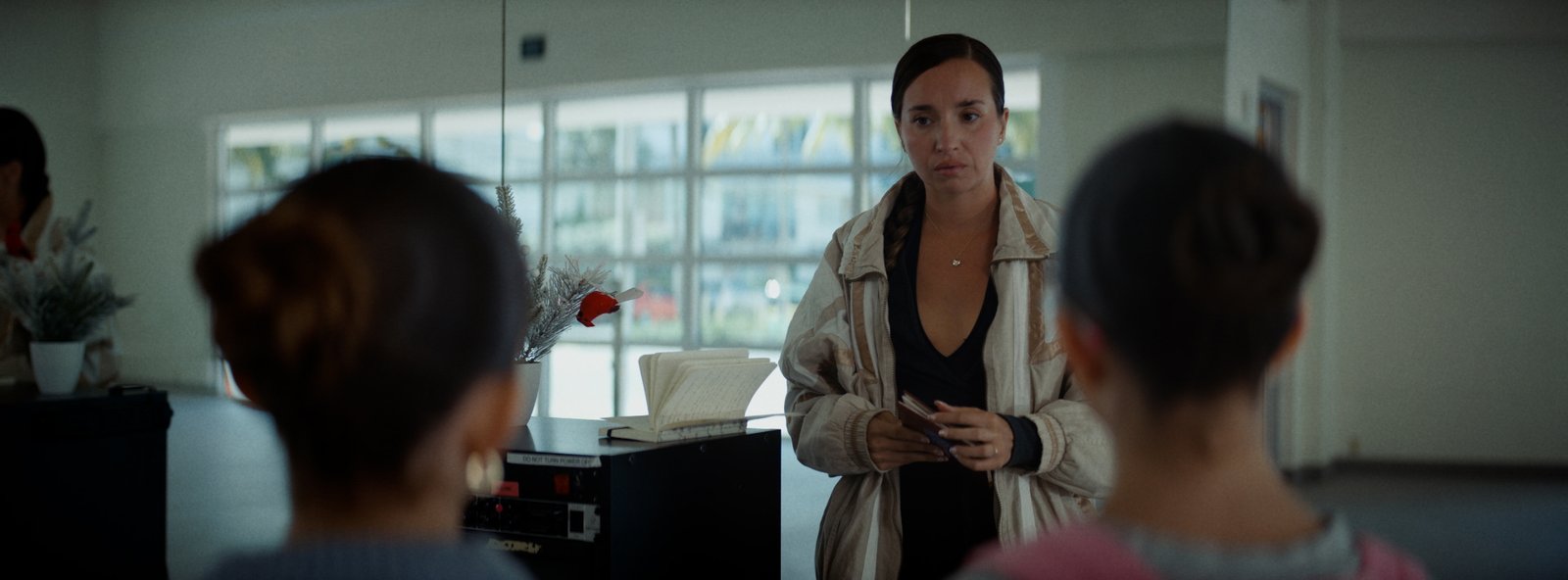
Josefina: I hope audiences reconnect with a more honest relationship to their emotions. As we grow, we often learn to control what we feel, to present ourselves in a certain way, and in that process we can lose touch with something more instinctive.
For me, becoming an artist was a way to return to that place, to reconnect with emotions in a more direct and sincere way. To experience them without needing to define or justify them.
With Two Tears, I hope audiences can come back to that state, even if just for a moment. To remember what it feels like to be present with emotion, to allow it to exist without trying to shape it. There is something very powerful in that openness, in simply letting yourself feel.
Josefina: Every project teaches you something, so of course there are always things you would refine. But I also believe the film exists as it needed to exist in that moment. It holds the conditions, the limitations, and the discoveries of that time. I’m more interested in carrying those learnings forward than in changing what has already been created.
Josefina: It gave me a very profound understanding of my need to tell stories through narrative film. Through this process, I began to trust my voice as a writer in a way I hadn’t allowed myself to before.
I have been working as a creative director for many years across advertising, music videos, and theatre, telling other people’s stories. I would make them mine through my vision and my direction. In theatre, I adapted texts and directed actors in my own way. But this was the first time I wrote a story from scratch and saw it come to life on screen.
That experience shifted something in me. It made me recognise my voice as something that deserves space, and it also gave me a sense of responsibility to continue this path.
Josefina: For me, creativity is not a miraculous act. It’s a determination, it’s a lifestyle. You have to work on your ideas every day, stay close to them, nurture them, and give them time to grow.
There is no way to create something meaningful if you don’t try, if you don’t take risks. Art is risky, it can feel vertiginous, and there is no way around that. Making art requires bravery.
So my advice is to be brave. Do things. Make mistakes. And then continue doing more.
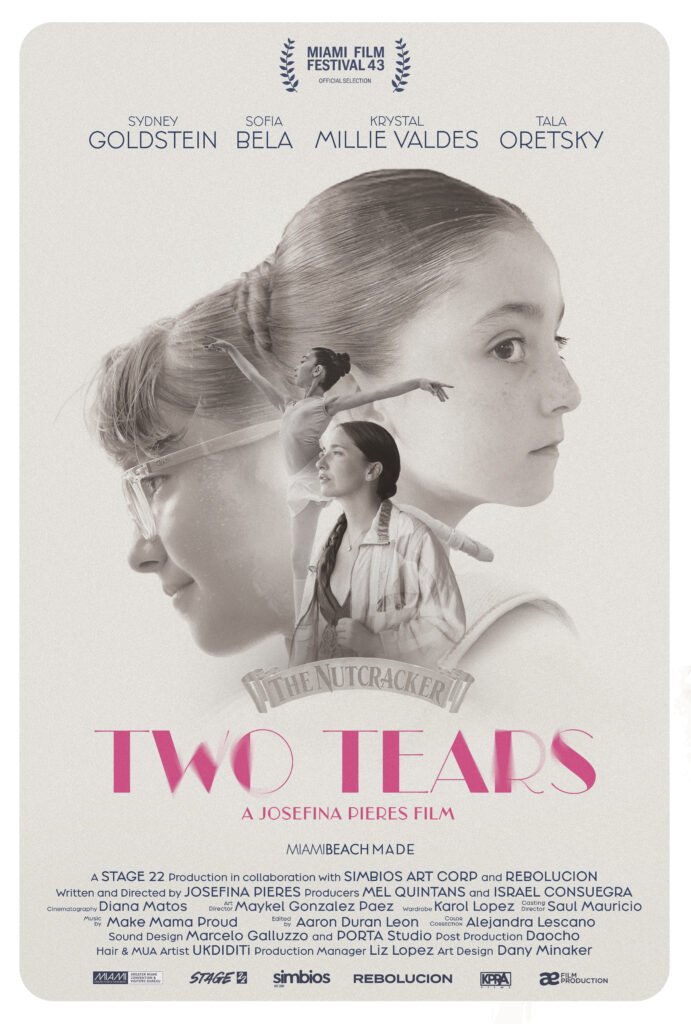
What lingers after speaking with Josefina Pieres is not just the story of Two Tears, but the philosophy that breathes through it a belief that emotion cannot be manufactured, only allowed. Her reflections carry a quiet wisdom shaped by experience, loss, and an enduring relationship with art as both refuge and revelation.
There is an honesty in the way she embraces imperfection, understanding that each project exists as a fragment of a moment in time, complete in its own becoming. And perhaps that is where the true beauty of her work lies in its refusal to force meaning, choosing instead to sit gently with it.
In a world that often demands control, Two Tears feels like a soft rebellion, reminding us that sometimes, the most profound thing we can do is to simply let ourselves feel.
Through her latest film, 'Get You, Better', Danica Jensen explores the ...
There is something quietly powerful about short films that know exactly ...
Leave A Reply