If You Should Leave Before Me – Love, Loss and Oddity
Some films lure you in with their premise alone, whispering promises ...


For nearly a decade, filmmaker Kimberlee Bassford followed the life of acclaimed Samoan writer and activist Sia Figiel, believing she was documenting the story of a groundbreaking literary voice navigating personal struggles and a path toward healing.
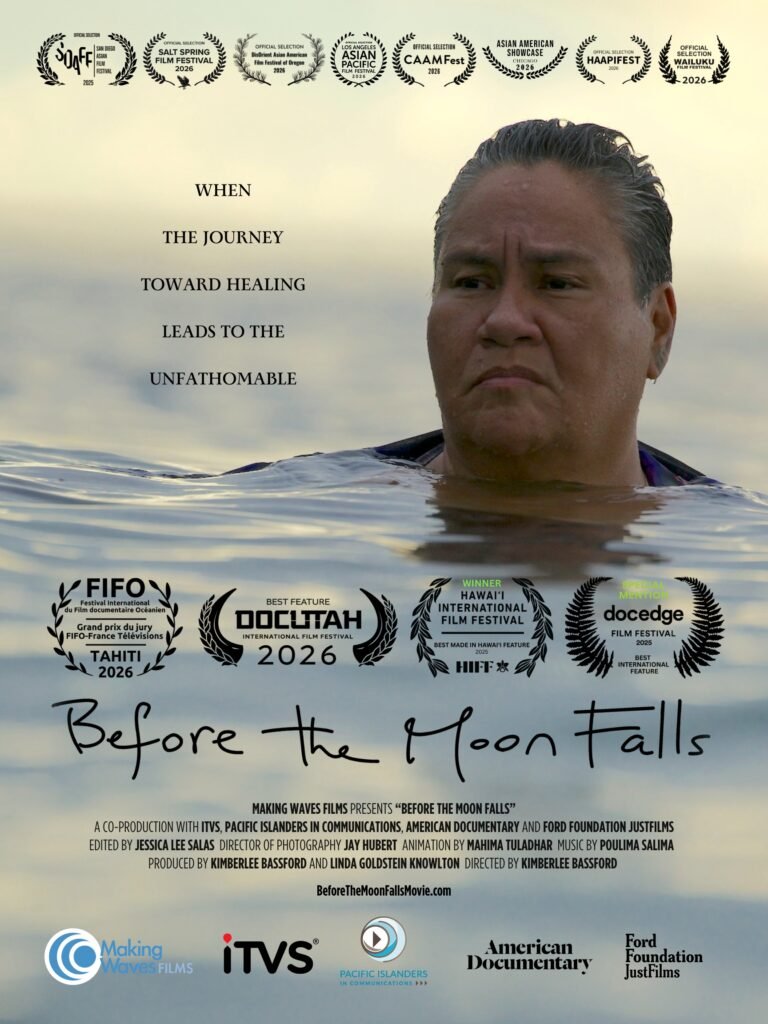
What emerged instead was something far more profound and heartbreaking. In Before the Moon Falls, Bassford crafts an intimate and compassionate portrait that explores creativity, trauma, mental illness, and the unpredictable nature of documentary storytelling itself.
In this conversation, she reflects on the journey that began with admiration for Sia’s writing, the ethical and emotional challenges of documenting a life in crisis, and the lessons she learned about empathy, trust, and the responsibility of telling deeply human stories.
Kimberlee: I wanted to tell stories that have impact in the world. And I wanted a career that allowed me to be creative visually, that offered variety and constant learning, and where I can work independently. Documentary filmmaking was a natural fit.
Kimberlee: During college, I did a Pacific Island Studies semester abroad program in Samoa. Sia’s books were assigned reading, and they were books that stayed with me because of their raw and brutal depictions of Samoan girls and the traumas they endure.
Then in 2016, I went to a book event that Sia was having in Honolulu. I was immediately taken by her charisma and candor. She shared about her personal struggles with diabetes and obesity and her plans to walk across America to raise awareness of the diseases. I thought there might be an interesting story there, so I introduced myself to her and asked if she might be interested in having me document her walk. That’s how the film project began.
Kimberlee: The title comes from a Samoan proverb that Sia refers to in the film, which says that when a high chief dies, the moon has fallen. I’ve always seen Sia as a culture bearer for her people and for girls and women in the Pacific. And the story we tell in the film is the story before her fall. Also, the moon is cyclical with the dark new moon and bright full moon. It’s like bipolar with the mania and the depression. The moon also carries so much symbolism across cultures and is a prominent motif in Sia’s writings. So there are a lot of layers of meaning in the title.
Kimberlee: The shifting point is in the film, and it’s when Sia calls me a few days after a suicide attempt. She then comes to Hawai‘i, and I realise she’s still in crisis and take her to a hospital. That’s the point when I realize I’m no longer just a filmmaker following a story but an active participant in her story.
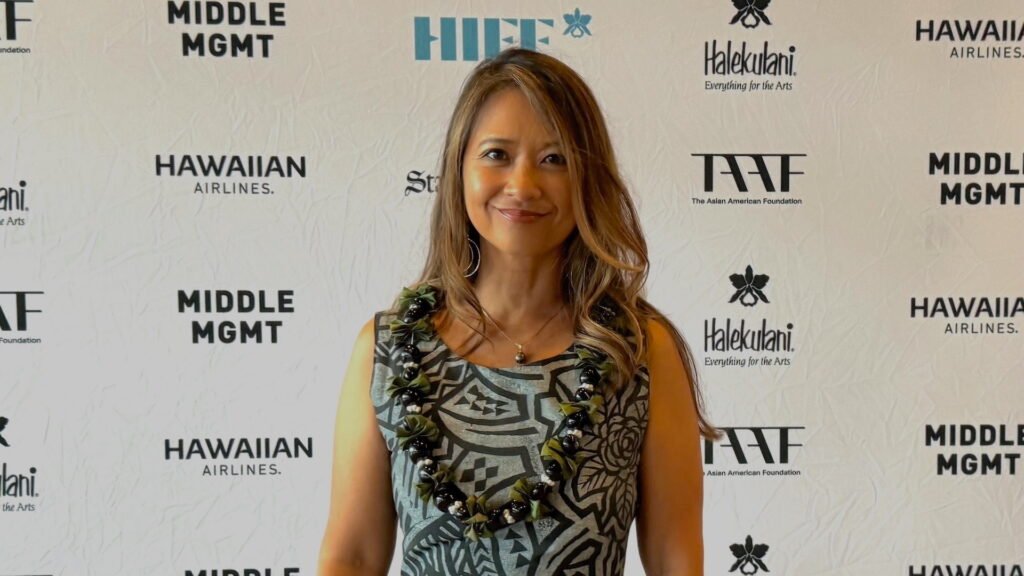
Kimberlee Bassford
Kimberlee: I started understanding Sia through more and more layers. First, she was a writer I admired and then an activist. I then came to see her roles as a daughter, sister, mother, friend, mentor and colleague. She then started sharing more of her history with me, and I realized the complex forces and experiences that have shaped who she is, including her childhood, family and cultural influences. In many ways, the film is structured similarly where you start out knowing Sia on a surface level and then it gets more and more intimate.
Kimberlee: I think it’s natural that as you get to know someone and build trust with them that they will open up more. I always brought a lot of patience and empathy to my interactions with Sia, and maybe she was responding to that. But really, I don’t know that I did anything special. I just tried to offer Sia a safe, non-judgmental space to share her thoughts and emotions.
Kimberlee: Yes, I was a psychology major in college, and mental health is something I’ve been interested in for a long time. Once it became clear that mental health was part of the film’s story, I hoped the film could be used to destigmatize mental health in general and mental illness in particular. So through the way we filmed Sia and also the way we edited the film, our team really tried to show the complexities around Sia’s mental health in a honest, yet compassionate way.
Kimberlee: The most challenging sequence was the series of phone calls I have with Sia at the end of the film. The actual phone calls were hard on me emotionally. And then ethically and tonally, it was hard to know how much to share with the audience and how to frame the information. Ultimately, through a lot of discussion with my producing partner and editor, I think we found the right balance of what to include.
Kimberlee: I like that term! Well, I would hope all filmmaking, except for maybe some investigative journalism, is compassionate. I think it starts by respecting your participants, their time and the courage it takes to share parts of themselves with you, whether in an interview or allowing you to film them in their everyday lives. It’s recognizing that they are an active and integral part of the filmmaking process and treating them with empathy and care. It’s also giving them the opportunity to say no to filming at times.
Kimberlee: Definitely. There were times that I had the crew all ready to go, but Sia wasn’t in the mood for filming. And so I’d just give her the space she needed. There were also times when she’d call me out of the blue to tell me about what’s going on in her life or to ask my advice on something she was dealing with, and I’d listen and respond as a friend. I think sometimes she just wanted someone to talk to.
Kimberlee: We ended up filming in so many places because that’s where Sia’s life took her. She had a hard time staying in one place for various reasons. But that was part of the story, so I tried to get coverage the best I could. Often that meant hiring crews remotely. That also involved more travel expenses, and since we had a lean budget, it often meant I worked with skeletal crews. On our two Samoa shoots, for instance, it was really just me, my director of photography and a local PA.
Kimberlee: I think everyone might feel different after watching this film. It’s a complex story with a lot of layers, and people bring to a film whatever life experiences and beliefs they have. And people have a lot of different thoughts about mental illness and trauma. I know I can’t control what people bring to the film, but what I do hope is that at the end of the film that they feel they’ve gotten a little bit more understanding, a little bit more insight into what it’s like to struggle with many different issues, and really just have more empathy for anyone who is struggling. And I hope they will realize how important it is to prioritize mental health in their own lives.
Kimberlee: This is by far the hardest and most intense film I’ve ever made, and it’s really stretched me as an artist and storyteller. Stylistically, I incorporated animation, motion graphics, sound design and music in ways I hadn’t in the past — all with the goal of wanting the film to rise to the level of Sia’s art. This film is also a lot more lyrical than my previous work, again trying to match the lyricism of Sia’s writing. On the personal and ethical side, it really pushed me to be patient and empathetic and to try not to stress over the things I can’t control but trust that the story will go where it goes and that the film will find its way.
Throughout our conversation, Kimberlee Bassford speaks with the same thoughtfulness and compassion that define Before the Moon Falls. Her reflections reveal not only the challenges of documenting an extraordinary and deeply complex life but also the emotional weight of carrying a story that evolved far beyond its original intentions. What emerges is a portrait of a filmmaker committed to honesty without judgment and empathy without compromise.
As Before the Moon Falls continues to resonate with audiences around the world, Bassford’s hope remains clear: that Sia Figiel’s story encourages greater understanding of mental health, deeper compassion for those who struggle, and meaningful conversations that extend far beyond the screen.
Some films lure you in with their premise alone, whispering promises ...
Cinema is one of the most powerful tools for preserving culture, ...


Leave A Reply