
F1 The Movie – Runs Smooth But Feels Too Safe.
Joseph Kosinski’s F1 arrives with the weight of expectation, the kind ...
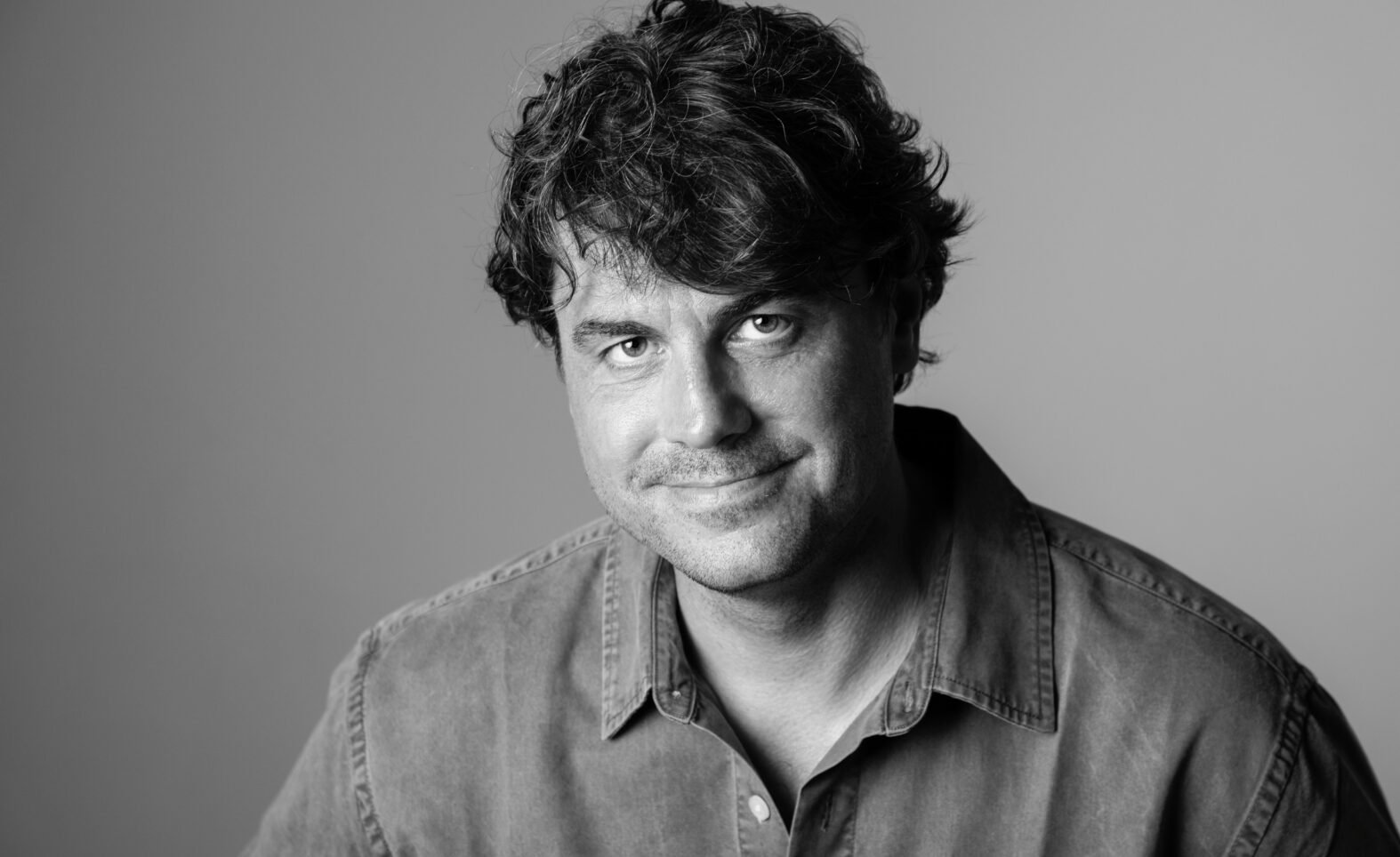
With ‘Creators’, Nikolay Sysuev turns his attention to a world where attention has become currency and authenticity can be difficult to separate from performance.
Yet, rather than approaching social media culture with a heavy hand, the filmmaker uses dry humour, absurdity and character-driven storytelling to examine why people feel compelled to be seen, validated and rewarded by strangers.
What makes the film particularly compelling is Sysuev’s refusal to offer easy answers. He sees technology as more than simply a tool and audiences as more than passive spectators, recognising the complicated relationship between creators, viewers and the algorithms that increasingly sit between them.
As he discusses his directorial debut in this conversation, Nikolay Sysuev also reflects on the long process of finding his voice, the importance of protecting a character’s emotional journey, and the strange moment when a film finally leaves its creator’s hands and begins to belong to its audience.
Nikolay: I think most people who get into filmmaking don’t fully appreciate how long it takes to even begin to figure out how to tell interesting stories through this medium. It’s such a nuanced craft that I sometimes think even the famous 10,000 hours might not be enough. I’ve been doing this for about eight years, and I feel like I’m only now beginning to distinguish between something derivative and something that has potential. In that sense, my career so far has mostly been about learning how much there is still to learn.
Nikolay: I’m not sure I ever thought the film “needed to be made.” I’m usually just chasing ideas that I can’t quite let go of. For years, I had this idea about someone putting another person in danger just so they could save them and look like a hero. It actually stayed with me from before social media completely took over our lives. Then I started watching content creators desperately trying to outperform each other, with the algorithm constantly demanding something bigger and more outrageous. Suddenly I had the perfect character for this idea, and that’s when the film really started to take shape.
Nikolay: I love the word “creator” because there’s so much ambiguity in what it means now. It can describe people making wildly different things, in wildly different ways, sometimes without even realizing they’ve become part of someone else’s content. I think even people who use it to describe themselves sometimes do so with a degree of irony or self-deprecation. There’s something strangely grand about the word. It feels like the perfect word for this enormous explosion of content, and all the excitement, confusion and anxiety that has come with it.
Nikolay: We’re all going through a very interesting time right now, and I think the effect of technology on our collective consciousness is something we’ll be trying to understand for a long time. The relationship between the creator and the viewer is fascinating, but there’s also a third actor in that relationship, which is technology itself. It’s this black box that sits between the two and amplifies everything, often in ways neither side fully understands. How that affects both the creator and the viewer is something I think we’ll be figuring out for a long time.
Nikolay: I try not to differentiate too much between “content” and “cinema.” Ultimately, I think what anyone making something creative is trying to do is have an emotional connection with a stranger. A ten-second video shot on a phone can have a greater emotional impact on someone than a $200 million film. The tools, scale and intentions might be completely different, but that basic desire to connect with another person is the same.
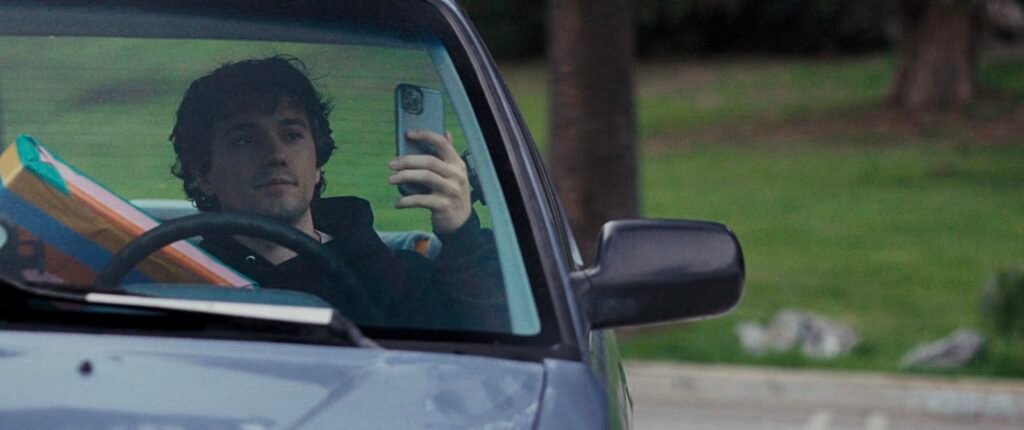
Creator (2026)
Nikolay: I wouldn’t point to anyone specifically. I think the approach is inevitably an amalgamation of everything I’ve watched, liked and learned over the years. But when I’m working on something, I try to focus less on how other people have done it and more on what the story itself needs. I’ve always been drawn to minimal dialogue and storytelling through images and behavior. And the dry humor, particularly the juxtaposition of contrasting elements, is probably just the way I tend to look at the world.
Nikolay: More than anything, it reinforced for me that every decision has to serve the emotional journey of the character. You can get distracted by a million creative choices—camera, performance, editing, sound—but ultimately you have to keep coming back to something very simple: what is the character experiencing at this moment? That became a kind of compass for every decision we made.
Nikolay: There’s always a moment in production when you realise the train has left the station. This thing is happening, there’s no going back, and eventually it’s going to be out there in the world with all its flaws. You spend so much time trying to shape it, and then at some point you realize it’s going to have a life completely outside of you. You have to accept that it’s a reflection of you, that people are going to experience it, criticize it and judge it. I find that a very interesting moment in the process.
Nikolay: I don’t know if I’m hoping to ignite any particular debate. It’s a comedy and a satire, so first of all I hope people get a few laughs out of it. The conversation around social media is already so saturated that it’s difficult to say something truly groundbreaking. But if someone walks away thinking, “I hadn’t quite looked at it that way before,” or finds an angle they hadn’t considered, that would be more than enough for me.
Nikolay: I’m working on a feature that moves a little further away from thriller and into grounded sci-fi, although there’s still some comedy in it. It has some of the same elements we’ve been discussing—a fairly ordinary person finding themselves up against a system much bigger than they are. It’s a very different story from Creators, but I think some of the same interests and sensibilities are there.
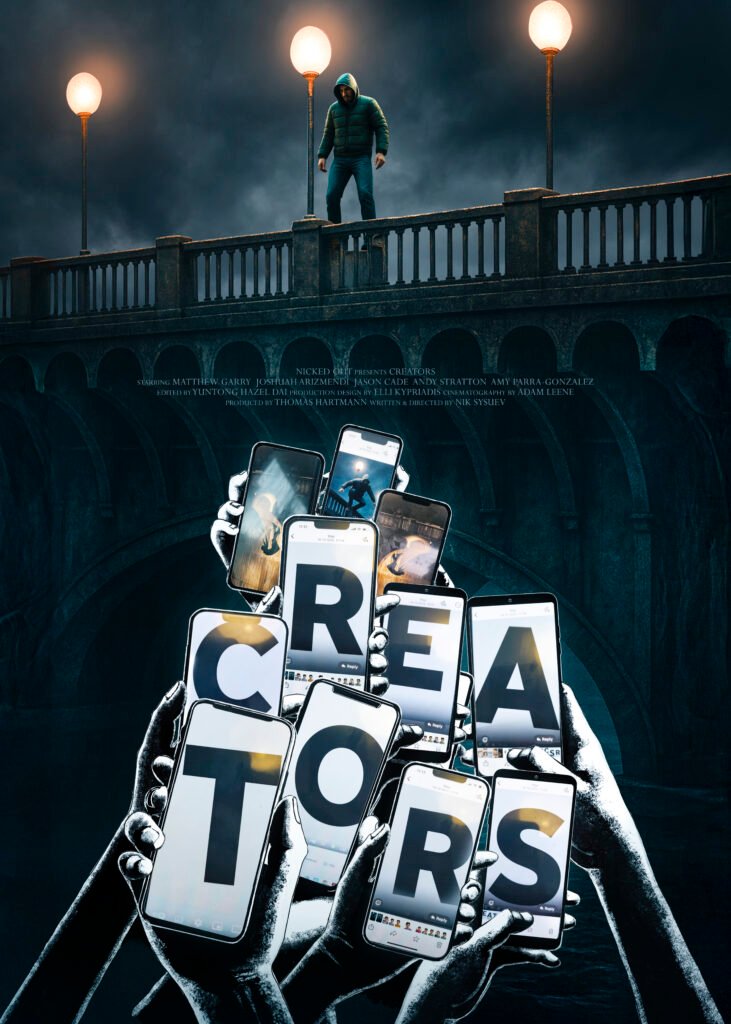
For Nikolay Sysuev, ‘Creators’ is ultimately less about condemning social media than observing the strange world it has created around us. His hope is not necessarily to provoke a definitive debate, but to make audiences laugh, think and perhaps recognise something they had not considered before.
That modest ambition feels fitting for a filmmaker who describes his own career as an ongoing process of learning how to tell stories.
With his next project taking him into grounded science fiction while retaining his interest in ordinary people confronting systems larger than themselves, Creators already feels like an intriguing introduction to a filmmaker still finding his voice and one worth watching as that voice continues to develop.
Joseph Kosinski’s F1 arrives with the weight of expectation, the kind ...
Some stories do not ask to be told loudly. They arrive ...

Leave A Reply